Watch Styles — 2026
Dive Watches:
Heritage, Design & Guide
The dive watch is arguably the most successful watch category of the modern era — born from genuine underwater utility in the 1950s and now the dominant aesthetic in men's watches worldwide. Understanding the heritage behind the design helps you appreciate what makes a good dive watch great.
The Origin: 1953
The modern dive watch as we know it was essentially defined in 1953, when Rolex introduced the Submariner and Blancpain introduced the Fifty Fathoms within months of each other. Both watches addressed the needs of underwater divers — depth rating, legibility in low light, elapsed time tracking — through designs that have remained virtually unchanged in their essentials for 70 years. The dive watch's visual language is a direct response to functional requirements.
The Unidirectional Bezel — Why It Only Turns One Way
The rotating bezel on a dive watch serves a specific safety function: it lets a diver track elapsed time underwater (critical for managing air supply). The bezel is unidirectional — it only rotates counterclockwise — by deliberate design. If the bezel is accidentally moved, it can only rotate in a direction that shows more time has passed than actually has. This means a diver relying on the bezel to time their dive will surface earlier rather than later — a safety margin built into the mechanical design.
This is why the ISO 6425 standard for professional dive watches mandates a unidirectional bezel. Watches claiming to be "dive watches" with bidirectional bezels do not meet the full dive watch standard.
Luminescence — Reading in the Dark
Dive watches use luminous material on the dial indices and hands for visibility in dark water. Modern dive watches use non-radioactive Super-LumiNova, a photoluminescent material that stores light energy and releases it in darkness. The ISO 6425 standard requires that a compliant dive watch's dial be legible in total darkness after exposure to light — meaning the lume must be both plentiful and bright.
Among our catalog, the Invicta Pro Diver models use bright lume plots on their dials and hands. The Seiko 5 Sports uses Seiko's own LumiBrite — a similar technology.
Water Resistance and Screw-Down Crown
True dive watches require 200m (20ATM) water resistance minimum. Achieving this requires a screw-down crown — a crown that threads into the case to create a sealed chamber. The Invicta Pro Diver series uses screw-down crowns; when properly screwed down, the 200m rating is active. A common mistake is leaving the crown unscrewed, which eliminates the water resistance entirely. See our full water resistance guide.
The Modern Dive Watch — Beyond Diving
Today, the vast majority of dive watches are never used for actual diving. They've become the dominant aesthetic in everyday watch wearing — chosen for their sporty robustness, legible dials, high water resistance and universal versatility. A dive watch works equally well with jeans and a t-shirt as it does with a business casual outfit.
The Invicta Pro Diver 8926OB follows the classic tool-diver visual language — a coin-edge bezel, green or black dial, broad shoulders — paired with a genuine Seiko NH35 automatic movement at an accessible price. It's among the most popular affordable automatic watches on the market for exactly this reason.
Editorial Picks
Our editorial picks from the dive category — available on Amazon.com.

Invicta Men's Pro Diver 8926OB Automatic Watch — Coin-Edge Bezel, Stainless Steel Bracelet
$62.73
Price on Amazon.com at time of retrieval; taxes and shipping may apply
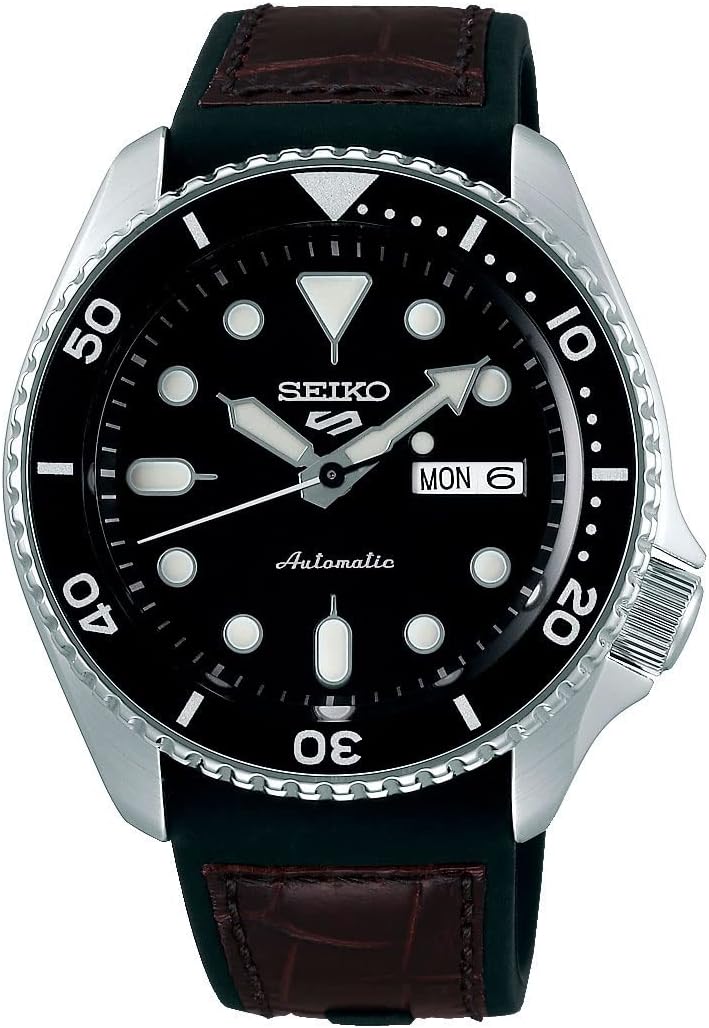
Seiko 5 Sports SRPD83K1 Automatic Watch — Black Dial, Nylon Strap, 100m WR, Day/Date
$89.95
Price on Amazon.com at time of retrieval; taxes and shipping may apply
See our full diver & sports watch selection, or learn about water resistance ratings in our detailed guide. Browse all watch guides.